Table Of Content
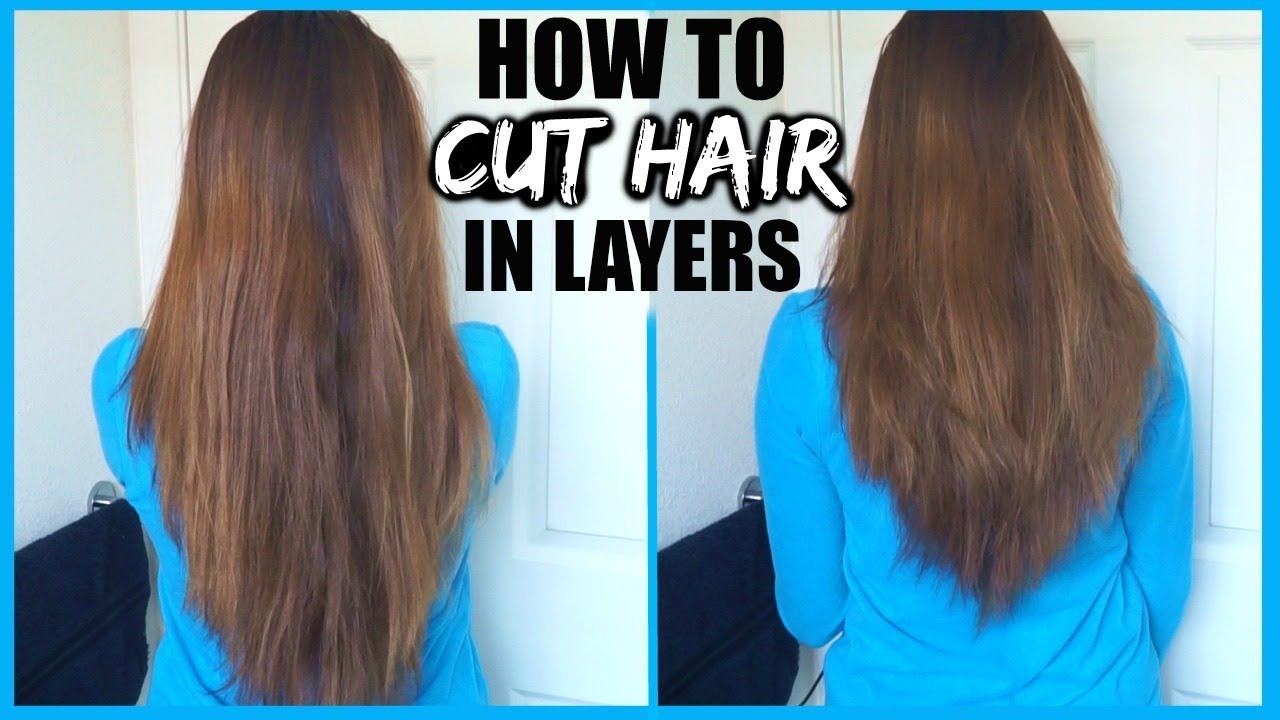
"If you cut your hair in an upside-down frown or smile, that will give you a lob that is a little bit longer in the front, and that’s super cute," Batalla Salva says. First, use the fine tooth end of your cutting comb to bring forward a small quarter-inch section of hair from each side of your natural parting. Carefully bring that down to your starting point, pull it out slightly so you can view what you're doing more accurately, and gently glide your shears down the hair. You will not be closing or dragging your shears but sliding, cutting your way down the hair. Keep reading for more thorough instructions on how to slide cut properly. Despite the current situation, some experts still don't suggest cutting your own hair if it's anything other than a straightforward trim.
Lift and cut the last section in the same way.
For this particular cut, I suggest a method called slide cutting. Slide cutting is a gentle approach that enables flexibility and less room for error. By keeping your shears open and making delicate pulses—never fully closing them together, let them glide down the front of the hair.
How to Cut Long Layers
The most important part of this step is making sure that the line between the section that you’ve tied up and the hair you’ve left down is super straight and symmetrical. Once you’re happy with the line, chop the bulk of the loose hair off with scissors and then shave it with clippers. Basically, you simply need to buzz cut your own hair at a definite area of your head (most often, the nape). Pop the majority of your hair in a bobble, leaving a few centimeters of hair loose at the back of your head.
Cutting Even Layers
This YouTuber shares her trimming technique for her gorgeous natural locks. For her, it's all about detangling and using your fingers for a more precise cut, and using already-cut hair as a guide to keep everything nice and even. Anyone with straight hair can use these foolproof methods to make sure your DIY cut is nice and even. Bring hair to the front and snip at an angle or straight, depending on if you prefer a rounded or blunt shape to your cut. Layers are a timeless look that gives your hair a chic and professional style. And believe it or not, you can easily do this style yourself right at home—no previous training or experience required.

Smooth hair into a ponytail at the top of the hairline near the forehead (hence the "unicorn ponytail" method), pull hair forward and snip ends. The sharper the angle, the more drastic the face-framing layers will be. We have selected the most helpful videos that teach to create every style, from blunt bangs and face-framing layers to lob and buzz cut. Follow these step-by-step tutorials and enjoy your refreshed hairstyle.
The bare minimum you need is a cutting tool, a comb, and some clips. Look for cutting tools that will steer you through the process with guides and guards. Don’t use your kitchen shears or your kid’s school scissors — they’re not even close to sharp enough for what we're trying to achieve here. With all the lockdowns and stay-at-home orders that have happened this year, people haven't been able to make it to their hair salon as often as they'd like.
If You're Going to Cut Your Own Hair at Home, Heed These Stylist Tips - Allure
If You're Going to Cut Your Own Hair at Home, Heed These Stylist Tips.
Posted: Wed, 26 Jul 2023 07:00:00 GMT [source]
If you've got curly hair, blow-dry your hair straight first before you begin, suggests Dickey. This style is layered with bangs, but you can also just trim the ends of your hair using the same technique. The key is to start small with a few careful snips — and to go slow. You can always take more hair off, but you can't add back what you've already chopped! If you're cutting your hair while it's wet, remember it will look even shorter once it dries, so snip with extreme caution. In fact, if your strands are curly or you're wavy-haired, only cut your hair when it's dry so you can get a better idea of what the final look will be.
The point of sectioning your hair is that it is easier to work your way up when cutting hair. So, my advice is – you can have as many (or as few) sections as you like, as long as the sections are the same on either side of your head. "Don’t be too alarmed if you don’t like your pixie [at first] because hair grows about a quarter-inch to half an inch a month," Dickey says. "In a week or two, no one’s going to see your skin fade that you went too short on." If you're transitioning from a relaxer, you can best see the line of demarcation between your relaxed and natural textures after you shower. Use scissors to get rid of the relaxed part, and then fully blow out the rest of your hair, so you have an accurate line and can do a precision cut.
How to Trim Natural Hair at Home
Next, take a deep breath and go to work on the loose hair with clippers. It can be easy to think that your hair needs to be perfectly straight every time you cut a piece, but that’s not necessarily the case. For example, if you are looking for ways to cut your own bangs, twisting the stands might be one of the best ways to get a natural feathered look. Once you’ve cut your hair straight across, you may find that your hair looks a little heavy or blockish. One of the possible ways to lighten the look is to make a few vertical snips into your hair. Read on for valuable advice that will make your haircut a success.
With this in mind, I will start the layers between my cheekbones and chin. Starting just below the chin will always be your safest bet if you have extra long hair. No matter your hair length or face shape, you never want to start your face-framing layers above the cheekbones or nose level. Jessica (she/her) is a deputy editor at the Good Housekeeping Institute and a longtime product tester, reviewer, writer and editor of beauty and lifestyle content. You can usually find her sorting through piles of beauty products — and testing the best ones on camera.
Dull edges on household scissors could potentially give you even more split ends (plus, ew, cross-contamination). Now that you've got the basics down, we've rounded up the best instructional videos below to help you cut your own hair at home, no matter what kind of cut you're looking for. Follow along as YouTuber Vivi König very carefully gives her bangs some TLC.
I like my curly hair to have lots of layers, but I also like it to look very cohesive between the layers and the length. I know I need a haircut when the ends start looking really stringy, my curls are stretched out, and I see more frizz. As far as length is concerned, Brooklyn-based hairstylist Teddi Cranford says it can be helpful to use your own face as a guide. "When cutting your own hair, always go a little longer and use your facial features as reference points," she says.
Blend sections of different lengths with your thinning scissors or ask a trusted friend to do it. For those brave enough to do the twist technique on a larger scale, it can also be used for a DIY stacked bob haircut. Take the back section of your hair, twist it taut and, once again, chop the end off. This will leave the hair at the nape of your neck short with the hair on either side gently fading into longer lengths.
To finish, I’m going to brush my hair out again and part it in the middle. Then I'm going to kind of create a little triangle in the front, pull it all forward to the center by my nose, and then I'm going to twist it. It looks like the one side is a little bit longer, which is no problem. The good thing about curly hair is that it's really hard to mess it up.
Learning to trim the nape of your head will also be useful if you’re trying to maintain or grow out a pixie cut. The best thing about this style is that it’s really easy to do and if you didn’t get it right the first time, you can simply wear your hair down and no one will notice (if you don’t go too bold, of course). It goes without saying that different hair types require different techniques. If you have afro-textured or curly hair and like to wear it natural, do not cur your own hair in straight lines – is not going to have the desired effect. Instead of trying to tame your curls into one single length, go with the flow of your hair. First, check out the basics on cutting your hair at home before you do anything else.



No comments:
Post a Comment